Many people would love to have an experience camping on a trailer, but they might be afraid of trying it out because they don’t know the steps to take to enjoy this incredible opportunity.
One of the benefits of trailer camping is the flexibility it provides. With a trailer, travelers have the freedom to choose their destination and route, and can easily change plans if needed. They can also stop and camp at any location that allows for RV parking, which provides a wide range of camping options. Trailer camping is also ideal for those who prefer a more comfortable camping experience, as the living space provides amenities such as a bed, kitchen, and bathroom facilities.
However, there are also some challenges to trailer camping that should be considered. One of the main challenges is the cost. Not everybody can afford to buy a trailer or have a vehicle to tow a rental trailer. Additionally, driving a larger vehicle can be more difficult and there are a lot of steps necessary to take to travel safely and comfortably.
I am writing this post to help you understand the challenges I’ve faced and how I can help you to start and have a smooth experience.
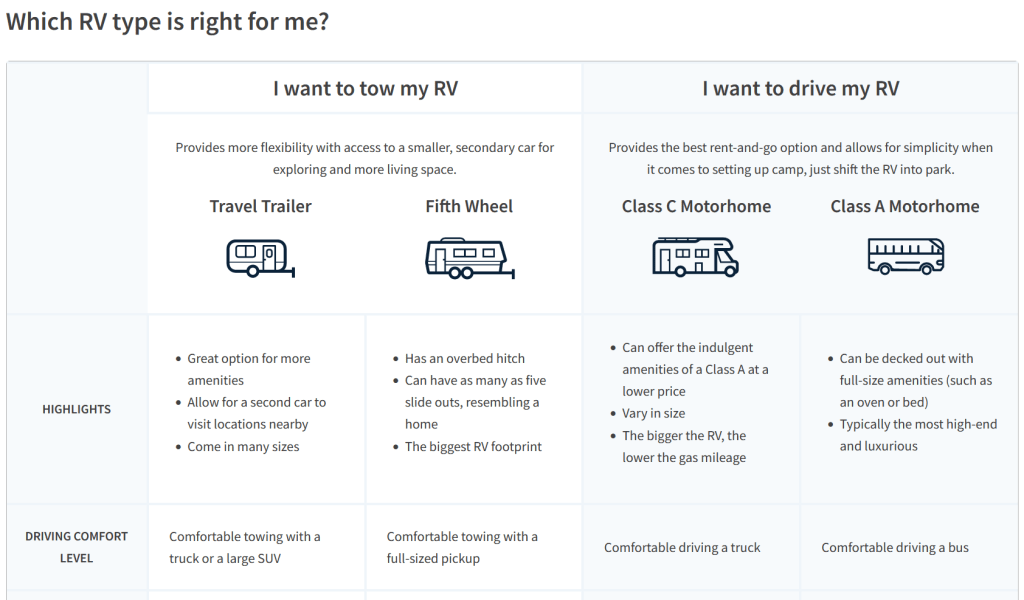
Type of trailer: First, you have to decide what type of trailer you would like to have for your experience. There are plenty of websites you can use to find the right vehicle for you. RV Share and Outdoorsy are two examples.
RV Share
Travel trailers and motorhomes each have their own set of advantages and disadvantages. Here are a couple of points to consider:
Travel Trailer – Pros:
- More affordable: Generally, are less expensive than motorhomes of comparable size and features.
- Flexibility: The main advantage is that you can detach the trailer from the tow vehicle and keep on camping site setup while able to travel with your car.
- Customization: You can choose a trailer and tow vehicle separately, allowing for more customization of features and layout.
- Easier to park: Since the trailer is not attached to the driving vehicle, it can be easier to maneuver and park in tight spaces.
Travel Trailer – Cons:
- Requires a tow vehicle: You need to have a compatible tow vehicle with a suitable towing capacity.
- Setup and take-down: You need to set up and take down the trailer at each stop, which can take some time and effort.
- Limited living space: Travel trailers have limited living space compared to motorhomes, which may be less comfortable for longer trips.
- Additional safety requirements: As travel trailer are heavy loads (from 2k pounts to 10k pounds), additional equipment will be required for towing.
Motorhome – Pros:
- Convenience: You can drive and live in the same vehicle, which can be more convenient and comfortable for longer trips.
- All-in-one: You don’t need to have a separate tow vehicle, which can be more convenient for some travelers.
- More living space: Motorhomes offer more living space and amenities than travel trailers, making them more comfortable for extended travel.
Motorhome – Cons:
- More expensive: Motorhomes are generally more expensive than travel trailers of similar size and features.
- Maintenance: Motorhomes have a more complex engine and mechanical system, which can require more maintenance and repairs.
- Parking limitations: Motorhomes can be difficult to park in tight spaces or in cities with height and length restrictions.
- Fuel economy: Motorhomes tend to have lower fuel economy than travel trailers due to their heavier weight and larger engine.
Ultimately, the choice between a travel trailer and a motorhome depends on your personal preferences and travel needs. Consider factors such as budget, travel style, and desired amenities when making your decision.
TOWING VEHICLE
In case you decide for a travel trailer of fifth wheel, I would recommend a couple of steps. Towing a trailer can seem daunting, especially if you’ve never done it before. However, with the right knowledge and preparation, it can be a safe and straightforward process. Here are some steps to follow when towing a trailer.
- Check your vehicle’s towing capacity: Before you begin towing a trailer, make sure your vehicle is capable of safely towing the weight of the trailer and its contents. Check your vehicle’s owner manual or consult with a professional to determine the maximum weight your vehicle can tow. Most SUVs don’t come with a hitch receiver. Even if you have this equipment installed, this doesn’t mean that you can tow a trailer right away. Your vehicle must have a 7-pin connector so you can operate the trailer safely. You will also need to a brake controller as part of a safety requirement. This is not a comprehensive list, but I am helping with some lessons learned from my experience.
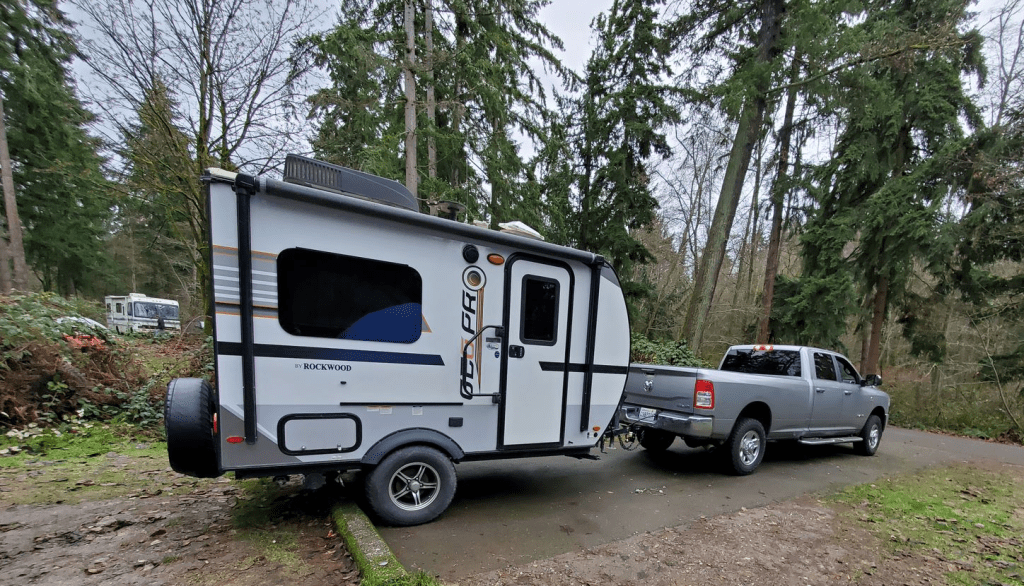
- Another option is to rent a truck to tow your trailer (which was most of my personal experience). Car rentals and car sharing platforms don’t allow you to toll. I am not sure why but I believe it has to do with insurance, so the options available are truck rentals like U-Haul or Enterprise Truck Rentals. My preference is to get an Enterprise Truck since their trucks are family friendly. You can rent models like Ford F250 or RAM 2500. You have to check the model and towing capacity of each vehicle.
- Now that you have the car and the trailer, you need to make sure you check things in between. To connect a towing car to a trailer, you will need several hitch components. Here are the main components required:
- Hitch Receiver – This is the metal square tube that mounts to the tow vehicle’s frame and accepts the hitch ball mount.
- Hitch Ball Mount: This is a metal bar that slides into the hitch receiver and holds the hitch ball.
- Hitch Ball: This is a ball-shaped attachment that fits into the hitch ball mount and connects to the trailer’s coupler.
The most common ball size for trailers are the 2 inches ball. Buying one adjustable hitch ball mount with two balls could be a good choice and gives you flexibility to use in different trailers and cars. It’s important to choose the right hitch components for your specific tow vehicle and trailer to ensure safe and secure towing. Consult your vehicle’s owner’s manual and the trailer’s manufacturer’s instructions for specific recommendations.

Some trailer owners ask for additional fees for the brake controller, hitch adapter and other accessories necessary to tow the trailer. I recommend sending them a message to make sure you have no surprises once you try to connect the trailer to the towing gear.
Despite these challenges, trailer camping is an enjoyable way to travel and experience the outdoors. It provides flexibility, comfort, and a sense of community for travelers. With the right planning and preparation, trailer camping can be a fantastic way to explore new places and create lasting memories.
 Demystifying camping and outdoor life in the PNW
Leave a comment